Tour de Chilika

Waiting for the boat at Satapada

Yesterday (9th January, 2024) I came back from a successful cycling trip in Orissa. My riding partner this time was my school friend Ambarish Dutta who now lives in Bhubaneswar. 

The trip details in short are like this. 

On day one of our tour we cycled from Bhubaneswar to Puri (66 Km). On day two we went from Puri to Balugaon via Satapada (60 Kms cycling and a 3-hr boat ride). Day three was a straight ride along the highway from Balugaon to Bhubaneswar (96 Kms). Satapada to Balugaon was a direct boat ride for three hours. This is a sort of circumnavigation of Chilika. I took the cycle by train from Howrah to Bhubaneswar and came back the same way.

If you are not familiar with this region you might want to check out the map here 

The map generated by Google is a little misleading on the Satapada to Balugaon section. It is showing a different route to cross Chilika. We took a more direct straight line route. I will explain it later. Please ignore it for now. Google cannot generate the map of the route we took to cross the lake.

The total riding distance involved was approximately 220 kms. If one is reasonably fit with a half decent bicycle, one can quite easily do this in winter (provided you have some means of carrying your luggage). We didn't have anyone to guide us about the route but we had done the two sides of Chilika by car in the past. So we knew what to expect. But we had no knowledge about crossing Chilika. Not a single person could answer our question about the cross. Not even people who live there on either side of the lake. The internet also had no information whatsoever. We found it out on the spot and it worked perfectly for us. This was our good luck. And as they say, luck favours the brave. 

Now follows the details of the trip. 

The most intimidating part of the ride for me was the train ride. There are a plethora of rules to deal with when you book anything as cargo on Indian Railways. Then comes the thought of leaving my baby - vulnerable to dents and bruises - to the mercy of illiterate coolies who deal with loads in a very crude way. 

In case you are a foreigner - Indian trains don't allow you to load the bike in your compartment. There is no such provision to keep bicycles there. The train compartments are only for passengers. You have to book your bike as an extra luggage. It is loaded in a parcel van (we call it a brake van) that is usually attached at the head or tail of the train (or sometimes at both ends) that you are taking. These goods compartments are usually crammed with commercial luggage booked by various transporters and courier companies. The railway coolies load the bike alongwith all that. It is a scary sight if you love your bike. So giving your bike a good protective cover, while keeping it mobile, is of paramount importance before it is booked.

I went a day in advance to Howrah station to find out exactly where to go for booking the bike and what all to do. I will write a seperate blog on the subject because it demands one. Suffice it to say here that I found the place and learnt that one must come at least 4/5 hours before the train's departure time. 

Here is a link to my ride from home to the station.

My train - Jan Shatabdi - starts from Howrah at 1:40 pm and terminates at Bhubaneswar. This is the reason I chose it. I left home at 8ish - the distance being 10 Kms or so. The previous night I had done a basic packing of the various tubes of the bike using old styrofoam tubes that I had (possibly they came with one of my bikes years ago) and some zip ties and 3M sticker tapes. One can buy the tubes at Chandni Market from shops that sell supplies for the refrigeration industry (like fridges and AC etc. These pipes are commercially used for covering copper tubes against external heat). But these available pipes are a little narrow. I am told one can even use flat styrofoam sheets and curve them around the tubes with a little bit of heat blown on them and shaping them around the tube. I don't have a hair dryer. Will try this out some other time.

I will possibly write a seperate piece on how to pack a bike for a train ride in India. The accompanying photograph below should give some idea.

I thought that in Howrah I will get it commercially packed by the local coolies. I had thought I would take the saddle off and carry it with me in the train. I use an expensive and hard to find in India Brooks saddle. It is very dear to me and under no circumstance do I want to expose it to any risk of being slashed.

At the luggage booking office I came across a few very friendly booking clerks, which is unusual in India. They were extra cooperative to see a senior person travelling with his bicycle. They asked a lot of curiosity questions about the ride and about me in general and rued the fact that they still have to slog at work while I was enjoying the retired life. For the first time I realised it is sometimes an advantage to be old. 
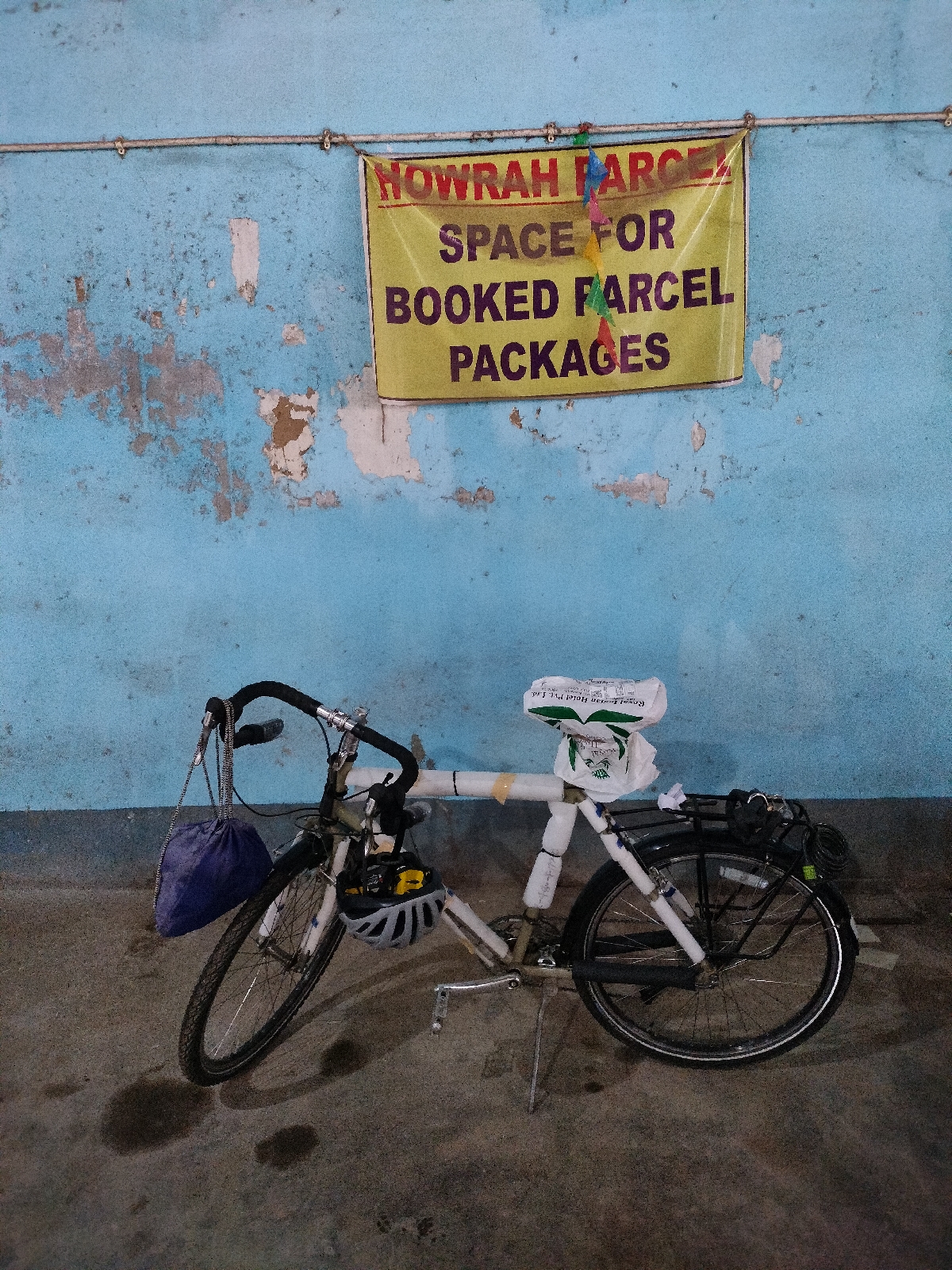
At Howrah Station goods office

They said the bike looked adequately packed and there was no need to get it commercially packed. I said then let me at least cover the leather seat. I don't think they realise exactly how expensive the saddle is. I wrapped a piece of blister cloth over the seat. Before that there was a PPE foam sheet. Finally I put a plastic carry bag over the seat and tied it with a jute rope. I was carrying all this and more in the small Scout bag that I carried to the station. They came in really handy at the station. 

Friends and relatives accuse me of carrying extra stuff. But I never want to regret not bringing something. I try to think through every possible situation and go prepared accordingly and often with a few fall back plans (fashionably called Plan B by management folks). 

Once packed properly and booked I said a pryaer and left it at the mercy of my fate. Next I went across the river to Monisha's office to bring back my luggage. She carried them by taxi from home to her office in Dalhousie. At her office I took a small lunch and once again came back to the station with my luggage - one largish duffel bag and a mid sized back pack. The duffel also had my two empty Ortlieb panniers that would be used while riding. 

I came back about an hour before the scheduled departure time of the train. A coolie was deputed by the Railways to take my bike to the platform and load it in the brake van. An old man named Yusuf did the job. Before my bike a huge number of very large sacks were loaded into the train. Finally my bike was somehow tossed on top of all that.

Curious onlooker on platform. Waiting to be boarded 

I considered myself immensely lucky that at the penultimate moment before leaving - that is, the evening before - my trusted cycle mechanic Someswar came to my house and installed a rear derailleur cage. The one I brought from Rito's Stay Tuned was broken and wasn't the right model for my bike. This is a life saver gadget if you travel with your cycle in Indian trains.

I reached Bhubaneswar in the evening. My friend was there at the platform already and was standing in front of the brake van to oversee the unloading. By the time the door was opened I had reached the spot too. We didn't want the bike to be thrown off the brake van. The bike was brought down carefully in our presence and we pushed it from platform six to one. At the parcel office there were certain formalities that had to be completed before we were issued the gate pass to go out. It took about an hour, which is an inordinately long time after such a long journey.

From the station my friend took both my bags on his motorbike while I rode the bike to his house - a distance of about seven kilometers over excellent roads. In fact the road had a cycle lane. The bike wasn't rolling freely. Later I realised the rear wheel was slightly misaligned where it was tilted to one side and touching the brake pad. Fixed it by taking the wheel off at Ambarish's house and installing it properly. 

The next day was spent getting ready and generally lazing around. First I removed all the tubings from the bike. Next I packed the two Ortlieb panniers with things that would go on the trip and set them up on the bike. For reasons that I will not describe here, we could take a test ride with the load quite late in the night.  At 9 pm in fact, which in a small city is pretty late. This is the first time I am travelling with a heavy load. I wanted to see how it feels. So this test ride was important. 

We went for a six kilometer spin around the block along the dark roads of Bhubaneswar. The load was certainly very heavy but more or less reasonably balanced. The bike felt a lot more stable and planted with the load. This I had always heard about the LHT and it was true I realised now. The combined load would have been at least 20 Kg, if not more. I also had a rather heavy chain for night time parking in hotels which added to the total weight of the bike. And all this was on the rear side. 

Next morning we started off on our Tour de Chilika. 

Before the start of the tour 

Bhubaneswar to Puri  

The road from Bhubaneswar to Puri is a brilliant 4-laned state highway. However, as it runs through a moderately urbanised area, there is rampant wrong side riding by local motorcycle riders. They use the first lane where we were riding. So one had to be cautious all the time. There was hardly any other commercial or tourist traffic on that road. Although Puri is a major tourist destination, it is very well connected by rail. 
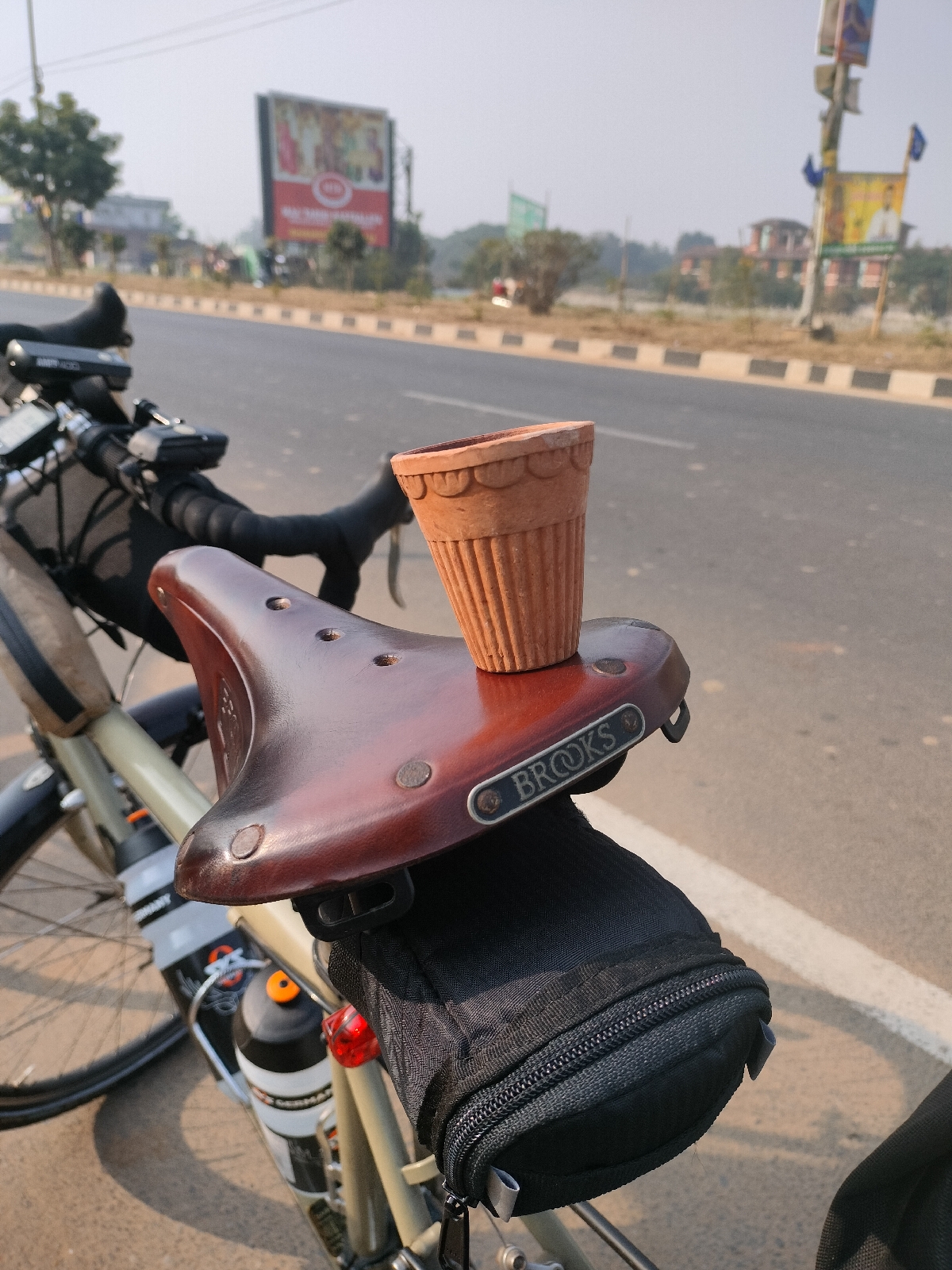
Tea break en route

We took one stop after around 25 Km when we took tea (in a cute little terracotta cup) and some biscuits. I was carrying some boiled eggs. I cannot remember if I had any. But generally speaking I wasn't feeling hungry at all. Perhaps because I was riding very slowly and was not pushing myself at all. I hardly felt any need to drink water. But I did keep myself hydrated even though I wasn't particularly thirsty. I keep a mix of normal water and water mixed with Electral for maintaining electrolytic balance.

I felt a little pain in the elbow. But nothing that didn't go away by changing the hand position on the handle bar frequently. 

We comfortably reached Puri around noon. Joy - our go to man for hotel bookings in Puri - had kept two rooms for us in a delightful little bungalow near the beach on Chakra Tirtha Road. We checked in happily and discovered much to our delight that we were the only guests there. Cycle parking was very safe under the portico of the house. At night we even brought them inside the living room of the bungalow. 

Outside Joy's villa off Chakra Tirtha Road

After a good long warm shower (the geyser and the overhead shower both work) we went to have lunch in one of the small hotels across the road followed by a siesta. A good deep sleep is perhaps the best recovery exercise one can imagine. I did that for sure, as is my wont. In the evening we went walking about a kilometer to Chung Wah for dinner. I love this authentic Chinese restaurant in Puri. It is actually owned and run by an immigrant Chinese family. 

In the evening we got some four eggs boiled for the next day's journey and went to sleep early. We weren't sure how we would cross Chilka and how much we might have to ride. We weren't sure where we might have to spend the night. It was all unknown. All I knew was we must reach Satapada and then find out all the details on the spot. That's the thrill of an adventure.

Beyond Sargadwar. Full of plastic trash

Puri To Balugaon via Satapada

From Puri we started in right earnest for Satapada at around 7 am. I took four boiled eggs with their shells intact as food for the road. We took the new 4-laned exit for about ten kilometers and then entered the narrow state highway towards Satapada. Although narrow, Satapada road had very little traffic and full of large trees and open fields. We stopped a couple of times for tea (there are many such shops on this road). I found a co-cyclist - a local villager who works in Calcutta. He said he was on holiday and was going for fishing. He works for Benfish near New Garia. I told him I would visit him there one of these days. He has another house in Hasnabad area of West Bengal. I told him that's a very Muslim area. Without getting offended he said he was Muslim too. We had very pleasant conversation for about five kilometers. He gave me some insights into life in general and fish in particular. He is a sorter of fish at Benfish. It felt really nice to have some conversation with a local. 

Many motorcyclists were slowing down next to us asking about where we were coming from and where we would go. All of them were very encouraging. Some even asked how much the bike cost etc. This is a question that really irritates me. I feel a little embarrassed and never disclose the actual price. I give a figure that in my estimate is slightly more than what they think it should cost. 

Waiting for the boat to Balugaon

Satapada, if you look at it on Google map, looks like a very wild place in the middle of water everywhere. Somewhat like western Ireland or northern Scotland etc. There is the open sea on one side and the big lake on the other. Though we call it a lake it is actually a lagoon - the largest brakish water lagoon in Asia. But when you actually reach the small hamlet it is rather underwhelming. No sea or lake is visible to the ordinary road user. It is just a very small hamlet with one parking lot for tourist vehicles, one marine interpretation center run by Chilika Development Authority and a Ro-Ro ferry ghat for going to Gopalpur. Tourists come here to see Irrawaddy dolphins. Because this is where the lake meets the sea and such areas are preferred by dolphins. 

To see all the water one needs to fly a little higher, I guess. 

In Satapada Ambarish stopped to take a work related phone call while I proceeded towards the ghat from where the boats and ferries start. 

If you plan to cross the lake with a car or even a truckk you need to go to the ferry ghat which is beyond the CDA building. If you are travelling with a motorcycle you can take a mechanised country boat that starts every half an hour from next to the Ro-Ro service. 

This way you are transported to a place called Jahnikuda from where you can go south and hit the highway to go to Gopalpur. If however, you want to turn towards north to go to Bhubaneswar then after hitting the highway you find Rambha first and then Barkul/Balugaon. Going to Balugaon via this route is quite a detour and will involve 60/70 km of riding after the ferry cross. 

All this may not make much sense unless you refer to the map or are familiar with the geography of the place.

As per our Google map research we realised it was possible to cycle 15/20 kms from Jahnikuda to Krushnaprasad (this is basically an island between the sea and the lagoon) and get a connecting boat/ferry to go to Balugaon (the map I have shared before shows this route). We had asked several people before about this connecting boat but no one could confirm it. We got very vague replies from people who were never too sure. Before entering Satapada someone told me yes it is possible. One has to go to Garh Krushnaprasad Jetty to get that connecting boat. 

Crossing the lagoon/lake

Near the ghat of Satapada when I reached and asked at a tea stall they also confirmed this. However, Ambarish soon called me (he had stopped a minute before me) saying there is another ghat from where a dirct boat goes to Balugaon. Someone else told him this. We were delighted. Several of our worries got taken care of in one go. We would go straight to Balugaon and wouldn't need to cycle an additional 70 km or so (it might get dark if we had to). 

In case you are interested - this boat starts from a ghat that is at the end of a narrow lane opposite to the parking lot. It normally starts at 12 noon. But on that day it would start at 12.30 they said (it actually did at 1 pm). It would cost Rs 80 and would take 3 hours. It is an open boat with a noisy engine. We would need to lay our cycles down and sit cross legged on the floor of the boat. You even have to take your shoes off. I guess it is a religious thing. Google map doesn't show this direct boat route. You cannot take a motorcycle on this boat. 

Waiting for the boat

We waited for an hour and a half under the shade of a large banyan tree near the ghat. This boat, we realised is mostly used by fishermen to send their catch in boxes to the market of Balugaon. There were around 8/10 other local passengers with us. One of them - a regular on this route - told us that if we had taken the other boat to Jahnikuda  we might have missed the connecting boat to Balugaon, as it was too late in the day. We told him that we were planning to take that as we were unaware of this direct boat service.

After a three-hour ride over the greyish water of Chilika we reached Balugaon. On the way we had the company of several brown-headed gulls who were being fed by some of the passengers. I also saw a few white bellied sea eagle and didn't miss the several brahminy kites that were flying around. Chilika is also a major birding destination and I have done it in the past. But this trip is about cycling.

Our bikes slept like this while we sat cross-legged

On the lake you never feel like you are very far from civilisation. There are signs of human activities everywhere. It is a major fishing area for local fishermen. At Balugaon the bank had concrete steps made (Satapada didn't have any such fancy embankment on the shore). We pushed the bikes up to the jetty. I have no idea where in Balugaon we disembarked. There was a busy fish market with a dirty narrow lane full of rickshaws and pedestrians. We made our way through all that and asked our way to hotel Digantika. 

We had the choice to go to Barkul which is 5/6 km in the opposite direction to Bhubaneswar. But we didn't want to cycle anymore. The bike ride from the jetty to Digantika was 2.5 km only. It was around 4.30 in the afternoon when we checked into Digantika. 

Parked bikes at Digantika, Balugaon

I have stayed in this hotel two times in the past. They have a covered parking space behind the hotel where we left our bikes, securing them together with my heavy chain. The hotel, though looks smart from outside is extremely basic and eminently avoidable if you have an option. An AC room cost us Rs 1200. There is no option in Balugaon actually. 

We had dinner at the restaurant attached to the hotel. Ambarish had a biriyani. I went for the traditional bhaat-daal-fried fish after a good warm shower. The geyser doesn't work here. But they gave us hot water in a bucket which was sufficient for me.

I made endless cups of tea and coffee in the room and went to sleep. We have a long 100 km ride tomorrow. 

Balugaon to Bhubaneswar 

Our longest ride from Balugaon to Bhubaneswar

In Balugaon we took our own sweet time to start and finally went out at 8 am despite this being the longest ride of the tour. From Balugaon it is a ten kilometer ride along the old narrow highway (with almost zero traffic) to the point where it meets the new 4-laned highway. It took us almost an hour to cover this distance because the road was fairly bad. Once on the highway the road surface was quite nice but there were three problems that we had to deal with. 

First was the relentless traffic passing by. These are mostly commercial traffic coming from South India. But the road being mostly 3-laned on either side, it was not a problem. We were riding on the extreme left lane of the highway and never felt intimidated by the trucks. There were some wrong side local motorcyclists but by now I am pretty used to them. 

The second problem was the series of flyovers or underpasses. It was like a chain of ups and downs. Relentless. I guess there were more than 30/35 flyovers that we crossed. But climbing the flyovers was not as difficult as dealing with the headwind that was also relentless. 

Climbing up slowly is not a problem for me because here you can see the enemy. But riding against a breeze is really tiring for me. It wasn't a wild wind or storm at all. But a constant breeze of sorts. My speed with all that load was naturally very slow.

There was one other fourth problem but that is a problem everywhere on Indian highways. It is very dusty. There are certain sections near Khurda where they are unfortunately cutting up entire hills. That throws up a lot of dust all over the area. It is very sad to see entire hills being flattened. Our future generation will perpahs pay the price for this senseless slaughter of nature. They are using the stones for building the roads of our country.

Breakfast outside Balugaon. Not as hot as it looks like here

Mentally I broke up the 96 kilometer ride into three sections of approximately 30 kms each. First came Tangi, the gateway to Manglajodi - a major birding destination in winter. Before Tangi we had a delicious breakfast of vidi vadas and rosogollas from a roadside eatery. One also gets idlis in these shops here but I didn't eat that. I had four crispy vadas instead. In fact as I write this my mouth is once again watering up. The rosogollas weren't up to the mark. They tasted more like danadars but gave me the sugar boost that I would need for the long journey. Vadas took care of the carb requirement. 

Somewhere near Khurda (Elephant corridor. Drive slow)

My next 30 km stage came at Khurda. This is where the hills are being cut up and it was very dusty here. There were a  few elephant corridor sign boards on the side of the road. I stopped for a photograph and then proceeded again. 

The last 30 km stage ended in Bhubaneswar city. My friend was kind enough to stop on the roadside to guide me out of the highway towards his home. It is otherwise very confusing with no signage anywhere. You are never too sure which exit goes where. 

In the evening we celebrated the successful end of the journey with another trip to another Chinese restaurant. 

Next day I unpacked everything from the cycle and loaded my luggage for the train journey. It was time to once again make the cycle "trainable" with all the foam covers. The train to Calcutta would start at 6 am in the morning. They had told me to book the cycle the evening before. I went to the station at 4 pm the previous day. It was a very smooth operation to book the bike for the outward journey. I had to leave the bike on the platform with no lock. That was a bit scary but railway is responsible for its safety.

Next morning my friend me dropped me at the station at around 5 am. The bike was still standing there alone. For the loading into the brake van they brought a cart loaded with some commercial goods in dirty looking sacks. They tossed my bike over them and pushed it away. The brake van being quite far from my compartment D6, I decided not to oversee its loading. I could hardly do anything much, I reasoned and left it to its fate.

At Howrarh Monisha came to take my luggage away (it would be impossible to put the heavy and longish duffel bag on the bike and ride it with the backpack on my back). On the platform I discovered my bike standing alone, resting against a lampost kind of thing and in the middle of lots of other unloaed commercial luggage.

I asked the railway official there if I could be released without going to the office. They checked my papers and issued a gate pass on the spot. I moved out of the station happily. This is not the norm (to be released like that straight from the platform) but I was lucky. 

Next step was to put Monisha in a taxi. This is a nightmare in Howrah. We found one somehow. I then cycled towards Ramkrishnapur Ghat alone from where I took a ferry to reach Babughat (costs Rs 6 each for the rider and the bike). After that it was a matter of just 8 km to home. I will explain this route in a seprate blog because not too many Calcuttans are aware of this route to cross the river.
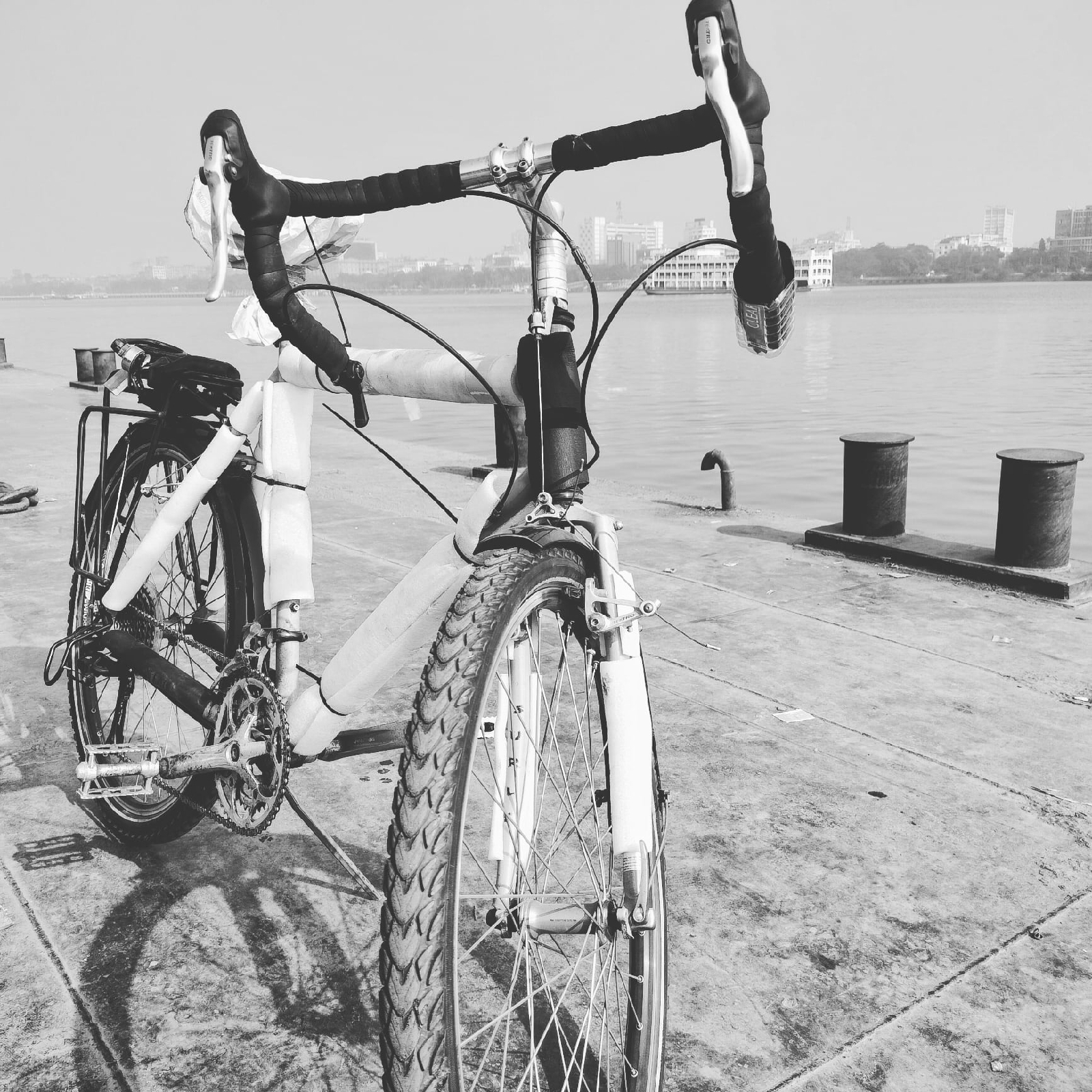
Waiting to go home at Ramkrishnapur Ghat

So that's the end of my story. This journey taught me two things. A. Taking the cycle by train is not as nightmarish as I thought. I just need to work out a way to carry the luggage alone. B. I can quite ride for 8/10 hours at a stretch now. After three covid attacks between 2020 and 2022 I had got quite weak. Now I am back to normal. I have to improve my speed a bit. 

I have to next see how much weight I can carry up a mountain. The weight I carried on this trip might not be viable on a mountain ride. Let me see. 


My Ladakh Plan

Stok Village during my Stok Kangri Trek


I have more or less made up my mind that I will be attempting the Manali Leh cycling trip in next summer. I have been meaning to do this for a long time now. A few years, to be precise. But somehow it did not happen because I feel this type of journeys should be done with unlimited time. With retirement imminent now, I have that from October. I shall attempt it in late June or early July. Rana is in principle agreed to go with me but July might be difficult for him. Let's see.

I want to write down the plans as and when I read about them. There are many questions in my mind that are as of now unanswered. Must seek an answer to them before I go. 

First Leg

I want to go by Rajdhani to Delhi. Take the HPTDC bus to Manali from there. Check into Hotel Neelkamal. Stay in Manali the next day. Cycle out the next day. 

So 

Day 1 train. 

Day 2 Delhi (board bus to Manali)

Day 3 Reach Manali 

Day 4 Rest in Manali 

Day 5 Start the ride

The HPTDC bus starts from the Himachal House area. Not ISBT. The logic for taking HPTDC is to save on the cycle booking cost. They charge Rs 300.

Questions on Leg 1

How to carry the cycle and personal items. Option 1. Pack the cycle in carboard carton and book in train. Option 2. Pack cycle in shoulder bag and carry in compartment. This I have to check by actually doing it. Have the pack.

Regarding personal bags will have to stuff things in a large duffel bag that can be folded small while riding.

Leg 2 - The Ride

Day 1 - Manali to Marhi (Hotel - Whispering Point Dhaba. There might be other dhabas)

Manali - Palchan (11 km) - Gulaba (23 Km) - Rahalla - Marhi (36 km)

The route is bloody steep. All the way up. Everyone says that. From Palchan bifurcation, left one goes to Atal Tunnel. Right one goes towards Marhi and onwards to Rohtang. Marhi has many dhabas but everyone may not have accommodation for the night.

Day 2 - Marhi to Sissu (Tashi Yangkhil homestay. Town has a circuit house)

Marhi - Rani Nullah - Rohtang La (17 Km/5 hrs) - Gramphu - Koksar (31 Km) - Sissu (51 Kms)

Marhi to Rohtang La is all the way up. Obviously. After Rohtang road is downhill or marginally up. Koksar has shops for lunch.

Day 3 - Sissu - Gondhla - Tandi (bridge crossing) - Keylong - Gemur (river bank tents) - Jispa - Darcha (Himalayan Food Corner shack)

Sissu to Gondhla is uphill. Gondhla to Keylong is downhill. Keylong to Jispa is steep uphill. Jispa to Darcha is moderate.

Day 4 - Darcha - Patseo (tent available) - Lower Zingzing Bar (lunch available) - Upper Zingzing Bar (27 Km) - Snow View Dhaba

Mostly steep climb in high altitude

Day 5 - Upper ZZBar - (Suraj Tal) - Baralacha La - Bharatpur - Sarchhu (50 Kms) - Mountain View Hotel 

Plans For Luggage

In terms of clothing, I think I will carry more or less what I carried to Darjeeling plus the Endura jacket and my Marmot half pants and perhaps two more dri-fit T-shirts and a few more socks. On top of this I will need to carry the tent, sleeping bag and foam mattress. I have half a mind to take only the red Ortliebs and not lug all the four bags. While going up I will put them on the front Duo, while going down I put them on the rear Logo rack. Of course the tent will have to be strapped to the rear rack but inside some rain cover. The Lowe Alpine bags are water resistant but not water proof. I have tested them out.

Of course, this time will have to carry a bit of dry food like dates and nuts etc which will need more space.

I must try out this set up during a practice trip before the actual journey. Perhaps to Darjeeling in March.

সাইকেলে দার্জিলিং

Up Hill Cart Road towards Rongtong - Pic Sumanta Gupta

দু হাজার উনিশের এপ্রিল মাসে আমি ও আমার বন্ধু রানা সাইকেল চালিয়ে দার্জিলিং গেছিলাম। যে কোনও জায়গায় যাওয়ার আগে আমি রাস্তা নিয়ে প্রচুর রিসার্চ করি। সাইকেল চালিয়ে দার্জিলিং যাওয়ার ওপর তেমন কিছু লেখা চোখে পড়ে নি। নিজের অভিজ্ঞতা ও সাধারণ বুদ্ধি প্রয়োগ করে ঘুরে এসেছিলাম। তাই ফিরে এসে একটা ব্লগ লিখে রাখি (এখানে ক্লিক করে পড়তে পারেন) যাতে অন্যদের ভবিষ্যতে সুবিধে হয়। কিন্তু সেটা ছিল ইংরিজিতে। আজকাল অনেক বাঙালি ছেলে মেয়ে দেখি দার্জিলিং যাবার জন্য ইনফর্মেশন খুঁজছে। তাদের জন্য এটা লিখলাম। একজনও যদি উপকৃত হয় তাহলে আমার প্রচেষ্টা সার্থক হয়েছে মনে করবো। 

প্রথমত বলি - আমরা কলকাতা থেকে দার্জিলিং পুরোটা সাইকেলে যাই নি। শিলিগুড়ি থেকে গেছিলাম। আমাদের দুজনেরই ছুটি সীমিত। আমি চাকরি করি। রানা উকিল।তাই কলকাতা থেকে শিলিগুড়ি তিন চার দিন ধরে সহজ প্লেন রাস্তায় সাইকেল চালানোর কোনো যুক্তি খুঁজে পাইনি। ওটা হাতে সময় থাকলে যে কেউ করতে পারে। ওই রাস্তাটা আমরা তাই বাসে গেছিলাম ও ফিরেছিলাম। কেউ পুরোটা চালিয়ে যেতে চাইলে আমার একদমই কোনও আপত্তি নেই। সহজ সোজা রাস্তা চলে গেলেই হলো। আসল চ্যালেঞ্জ শুরু শিলিগুড়ি থেকে। তাই এই লেখাটা ওই টুকু রাস্তা নিয়েই। 

প্রথমে রুট নিয়ে একটু বলি। 

শিলিগুড়ি থেকে দার্জিলিং যাওয়ার অনেক গুলো রাস্তা আছে। যারা বাসে বা শেয়ার ট্যাক্সিতে যায় তারা রোহিনী দিয়ে যায়। এটা শুকনা থেকে কার্শিয়াং অবধি অন্য নতুন একটি সোজা রাস্তা। দূরত্ব একটু কম হলেও বেশ খাড়া।  সাইকেলে যাওয়ার জন্য সুবিধের রাস্তা নয়। আমার উপদেশ পুরো শিলিগুড়ি থেকে ঘুম অবধি হিল কার্ট রোড দিয়ে যান। তারপর আলুবাড়ি দিয়ে দার্জিলিং। সোজা ম্যালে উঠবেন। তারপর আবার স্টেশন হয়ে হিল কার্ট রোড দিয়ে ফিরবেন। আমরা অন্তত তাই করেছিলাম। 

হিল কার্ট রোড এর খাড়াই তুলনামূলক ভাবে অনেক সহজ। তার ওপর এটা একটা ঐতিহ্যবাহী রাস্তা। এই রাস্তার পাশ দিয়েই ঐতিহাসিক টয় ট্রেনের রাস্তা। প্রত্যেকটা স্টেশনে দাঁড়িয়ে একটা ছবি তুলবো এটা আমাদের একটা মজার টার্গেট ছিল প্রথম থেকেই। তাই আমরা ওই রাস্তা দিয়েই গেছি। রাস্তায় অসংখ্য ছোট ছোট জন বসতি। সেখানকার লোকেদের সঙ্গে গল্প করে চা মোমো খেয়ে সাইকেল চালানোর মজাই আলাদা। আমি স্টেশন গুলোর একটা লিস্ট রেলের সাইট থেকে নিয়ে নিয়েছিলাম। তাতে সুবিধে হয় যে পরের স্টেশনটা কত দূরে আন্দাজ পাওয়া যায়। ছোট ছোট গন্তব্য তৈরি করে চালালে মনে সাহস আসে। পুরো ডিস্টেন্সটা একসাথে দেখলে ভয় করে। 

আমাদের রুট ম্যাপ। শিলিগুড়ি-কার্শিয়াং-ঘুম-দার্জিলিং-মংপু-শিলিগুড়ি 


শুকনা, রংটং ইত্যাদি হয়ে তিনধারিয়ায় লাঞ্চ। কার্সিয়াংয়ে প্রথম দিনের যাত্রা শেষ। পরের দিন টুং আর সোনাদা পেরোলেই ঘুম। ঘুমের আগে অপূর্ব সুন্দর পাইনের জঙ্গল।

আরেকটা রাস্তা দিয়ে যাওয়া যায়। সেটা হলো শিলিগুড়ি থেকে মিরিক হয়ে ঘুম দিয়ে দার্জিলিং। ওটা দিয়েও যেতে পারেন। আমরা যাই নি। হয়ত ভবিষ্যতে যাবো। ওটাও একটু খাড়া, তবে তেমন কিছু বোধ হয় নয়। হিল কার্ট সব চেয়ে সহজ। হিল কার্ট রোডের একটাই সমস্যা। রাস্তায় পাগলা ঝোরা বলে একটা ঝর্ণা পড়ে। ওটা অনেক সময় বর্ষা কালে ধস নেবে বন্ধ হয়ে যায়। বর্ষার আগে গেছিলাম বলে আমাদের সেটা নিয়ে ভাবতে হয় নি। আপনারা যদি বর্ষার পরে যান, তাহলে পাগলা ঝোরা সম্বন্ধে খোঁজ নিয়ে যাবেন। 

The journey starts from here. Just outside Siliguri

আপনি যত বড়োই সাইক্লিস্ট হন না কেন প্রথম দিন শিলিগুড়ি থেকে কার্শিয়াং অবধি যাবেন। তার পরের দিন দার্জিলিং। একদিনে পুরোটা যাওয়া অসম্ভব। আমরা দ্বিতীয় দিন ঘুমে থেকে গেছিলাম। ঘুম থেকে দার্জিলিং অল্প একটু ঢালু পথ। গেলেই হলো। প্যাডেল না করেই চলে যাওয়া যায় প্রায়। আমি আসলে এত অসংখ্য বার দার্জিলিং গেছি যে আমরা ঠিক করলাম ঘুমেই থাকবো সেদিন। ওখানে একটা হোম স্টে পেয়ে গেলাম তাই থেকে গেলাম। পরের দিন জাস্ট ছবি তোলার জন্য সকালে দার্জিলিং গেলাম ও আবার দুপুরের মধ্যে ফিরে এলাম ঘুমেই। আপনারা যদি দার্জিলিঙে থাকতে চান নিশ্চই যাবেন পুরোটা। আমার ঘিঞ্জি দার্জিলিঙে থাকতে আজকাল আর ভালো লাগে না। 

এবার আসি নিজের শারীরিক প্রস্তুতি, সাইকেল ও কি কি নেবেন সে সম্বন্ধে কিছু কথায়। 

শিলিগুড়ির একটু পর শুকনা থেকে ঘুম অবধি কিন্তু টানা খাড়া রাস্তা। পাহাড় শুরু হয় শুকনা স্টেশন থেকে। তারপর এক মুহূর্তের জন্য ফ্ল্যাট বা ঢালু পথ পাবেন না। শরীর অবশ্যই চূড়ান্ত ফিট হতে হবে। তবে প্র্যাকটিস করলে সবই সম্ভব। আমি নিজে রোগা পাতলা লোক। যখন গেছিলাম তখন বয়স পঞ্চান্ন প্রায়। কাজেই সবার পক্ষেই সম্ভব। তবে পাহাড় কে হেলাফেলা করবেন না। শারীরিক প্রস্তুতি নিয়ে যাবেন। 

রাস্তার ধারে একটু বিশ্রাম। অনেক পথ বাকি।

আমার সাইকেল টার পেছনে দশ ও সামনে তিনটে গীয়ার আছে। আমি একদম ফার্স্ট গীয়ারে চালিয়েছি। বয়স হয়ে গেছে আগেই বলেছি। আপনার শারীরিক ক্ষমতা অনুযায়ী আপনি ঠিক করবেন আদৌ গীয়ার ওয়ালা সাইকেল আপনার লাগবে কিনা। তবে যাবার আগে যেমন ওঠা নিয়েই আমাদের সমস্ত চিন্তা ছিল গিয়ে বুঝলাম যে পাহাড়ে ওঠার থেকে নাবা অনেক অনেক কঠিন। আমরা ঘুম থেকে সেঞ্চাল ফরেস্ট দিয়ে মংপু হয়ে ফিরে ছিলাম। সাংঘাতিক খাড়া ও সরু রাস্তা। ব্রেক করে করে আস্তে আস্তে নাবা। বেশী ব্রেক করলে রিম গরম হয়ে যাচ্ছে। টিউব ফেটে যাওয়ার আশু সম্ভবনা। তাই মাঝে মাঝেই দাঁড়িয়ে রিম ঠান্ডা করে আবার নাবা। এতে সময়ও লাগে বেশী আর ঝুঁকি তো আছেই। এই ধরণের রাস্তায় নাবতে গেলে ব্রেক যেন ১০০ শতাংশ ভালো থাকে। পারলে ব্রেক টাইট করা একটু শিখে নেবেন। ওই রাস্তায় ব্রেক না লাগলে কিন্তু হেঁটে নাবতে হবে। 

সাইকেলের ব্রেকের পর আরেকটা যেটা ভীষণ গুরুত্বপূর্ণ জিনিস মাথায় রাখতে হবে সেটা হলো - দার্জিলিঙের রাস্তায় সাংঘাতিক কুয়াশা হয়। দিব্যি ঝক ঝকে রোদ দেখে বেরোলেন। একটু পরেই ঘন কুয়াশায় সামনের চাকা পর্যন্ত্য দেখা যাচ্ছে না এরকম হয়ে যেতে পারে। এখানে দুটো জিনিস অত্যন্ত জরুরি। এক আপনার সামনে পেছনে যেন আলো থাকে। সেটা জ্বেলে নেবেন। আর পারলে হাই ভিসিবিলিটি জ্যাকেট পরে থাকবেন। ময়দান মার্কেটে খুবই সস্তায় পাওয়া যায়। যেটা মাথায় রাখতে হবে - গাড়ির ড্রাইভার যেন আপনাকে দেখতে পায়। এই প্রসঙ্গে এটাও বলে রাখি - সঙ্গে অবশ্যই একটা রেনকোট নেবেন ও হাতের কাছে রাখবেন। যে কোনও  মুহূর্তে যে কোনও সিজনে বৃষ্টি আসতেই পারে। জিনিস পত্র যা নেবেন সেই ব্যাগ হয় ওয়াটার প্রুফ হতে হবে অথবা প্লাস্টিক জড়িয়ে নেবেন। নাহলে গন্তব্যে পৌঁছে দেখবেন সমস্ত জামা কাপড় ভিজে গেছে। 

স্বপ্ন পূরণের মুহূর্ত। দার্জিলিং ম্যালে রানা আর আমি। সঙ্গে আমাদের প্রিয় সাইকেল। 

এবার আসি কি কি নেওয়া উচিৎ সেই বিষয়ে। 

প্রধানতঃ দু ধরনের জিনিস নিয়েছিলাম। এক হলো সাইকেল সারানোর বেসিক সরঞ্জাম। দুই নিজেদের জামাকাপড় ও অন্যান্য প্রয়োজনীয় জিনিস পত্র। একটাই কথা মাথায় রাখবেন - এক গ্রামও এক্সট্রা ওজন নেবেন না। চড়াই রাস্তায় ওঠার সময় মনে হচ্ছিল টুথ ব্রাশটাও ফেলে দিই। যারা কোনও দিন পাড়ার বাইরে সাইকেল নিয়ে বেরোয় নি তারা প্রচুর জ্ঞান দেবে এটা নে ওটা নে বলে। শুনবেন না। বইতে হবে আপনাকে। 

সাইকেলের জন্য শিলিগুড়ি থেকে দার্জিলিং আমি যে জিনিস গুলো নিয়েছিলাম সেগুলো হলো এই রকম 

Multi-tool
Puncture repair kit
Tyre lever and puncture repair set (see pic)
Chain link - 
Pliers 
Box spanner #7 and #8
Knife
Chain lube 
Pair of brake shoes (spare)
Two tubes
#4 Allen screws and washers - quite a few
Two spokes 
Long and short zip ties (about 6/8 each)
Rubber bands

সত্যি বলতে কি এর কিছুই লাগে নি। আমাদের যাত্রা ঈশ্বরের আশীর্বাদে নির্ঝঞ্ঝাট হয়ে ছিল। কিন্তু কিছু হলে মোটামুটি প্রস্তুত ছিলাম। হাওয়া ভরার পাম্প রানা নিয়েছিল। গ্রুপে গেলে ভাগাভাগি করে এগুলো নেওয়া যায়। 

আমি সাইকেল চালানোর সময় এই জিনিস গুলো পরে ছিলাম বা শরীরে ছিল  

Half-sleeve cycling jersey

Cycling bib

Socks 

Cycling gloves

Cycling helmet

Trekking boots

Turkish small hand towel

সঙ্গে এই জিনিস গুলো নিয়ে ছিলাম।

Half sleeve jersey - 1 (extra) না নিলেও হতো 
Cycling shorts - 1 (extra) না নিলেও হতো 
Half sleeve T-shirt- 1
Full sleeve inner T-shirt - 1 না নিলেও হতো 
Track pants
Briefs - 2 না নিলেও হতো 
Half pant with zippered pockets না নিলেও হতো 
Spare socks - 2 
Raincoat Upper 
Raincoat Lower
Warm packable Jacket - 1
Micro-light towel 
Cotton boxers for sleeping 

এই ইলেকট্রনিক্স ছিল সঙ্গে 
Head torch
Phone-charger
Powerbank
Tyre pressure gauge 
Cateye Velo 9 Odometer
Front light for the bike
Tail light 
Two tiny lights for the front and rear

এ ছাড়া যা ছিল 

Cotton rag - 1 সাইকেল পরিষ্কার করার জন্য যদি লাগে 
Regular and Emergency Medicines 
Basic first aid kit (Boroline, gauge, cotton wool, Volini/Relispray, Band Aids, crepe bandage) 
Toilet paper, Rin washing soap bar, toothbrush, paste, Nivea, Suncream lotion, comb 

এসব পড়ে মনে হতে পারে ওরে ব্বাবা এতো কিছু? প্রথমত মনে রাখতে হবে দার্জিলিঙে গরম কালেও বেশ ঠান্ডা। একটু বৃষ্টি পড়লে আর রক্ষা নেই। আর সত্যি বলতে কি এগুলো আমি নিয়েছিলাম আমার পিঠের একটা ব্যাগে আর ক্যারিয়ারে একটা প্লাস্টিকের ক্যারি ব্যাগে শুধু (বাঞ্জি কর্ড দিয়ে বাঁধা)। এ ছাড়া হ্যান্ডলে একটা ছোট ব্যাগ ছিল আর সিটের তলায় একটা টুল ব্যাগ। টাকা পয়সা রাখার জন্য কোমরে একটা বেল্ট পাউচ। এগুলো বেশির ভাগই আমি ট্রেকিঙেও ব্যবহার করি। তাই ছিল। 

রাস্তায় খাবার বা জল 

সঙ্গে অবশ্যই নিজের জল নেবেন। আমি এক বোতল প্লেন জল আর অন্য বোতলে ইলেকট্রলের জল নিয়েছিলাম। রাস্তায় প্রতি স্টেশনের আশেপাশে জনপদ আছে। সেখানে দোকানে সবই পাওয়া যায়। সঙ্গে ছাতু, কলা, ডিম্ সেদ্ধ এইসব ছিল। সেও খেয়েছি আবার মোমো বা ম্যাগি/ওয়াই ওয়াইও খেয়েছি। অসংখ্যবার চা তো আছেই। আমি ভালো নেপালি জানায় আমার থেকে চায়ের কেউ দাম নিতে চায় না। সে আরেক ঝামেলা। 

জল টা নিয়ম করে তেষ্টা পাক না পাক একটা নির্দিষ্ট সময়ের পরে খাবেন। আমি ঘন্টায় একবার করে খাই। এটা নিজের শরীর বুঝে করবেন। একটু করে ইলেকট্রলের জলও খাবেন। অনেকে ORS নেয়। Electral ও এক ধরণের  ORS ই বটে।  

ঘুম থেকে আলুবাড়ি হয়ে দার্জিলিং। অপূর্ব সুন্দর রাস্তা। 


পরিশেষে 

এই দার্জিলিং ট্রিপ আমার জীবনের প্রথম লম্বা সাইকেল ট্রিপ। অপূর্ব অনুভূতি। জীবনে অনেক কঠিন কাজ বা এডভেঞ্চার করেছি।  এর একটা অন্য আনন্দ। "হ্যাঁ আমিও পারি" এই বোধ টা। এটাই আমাদের এগিয়ে নিয়ে যায় পরবর্তী এডভেঞ্চারের দিকে। আমি বেশী ডিটেলে লিখলাম না। আপনার যদি কোনও প্রশ্ন থাকে আমায় একটা মেল্ করবেন। বা এখানে কমেন্ট করবেন। নিশ্চই জবাব দোবো। 

Round Trip To Badu


Taken a day before the trip

In my continued quest to explore rural South and North 24 Parganas on bicycle, yesterday I went on a round trip of Badu. Badu is a small hamlet near our ancestral village Kuberpur. It is on the road that connects Madhyamgram with Kharibari. Actually the idea for the trip was born when Chenku and I were talking about our childhood bike ride to Kuberpur long ago. Chenku and his son joined me and the three of us set off for this round trip on 25th October, 2020. We would go via New Town, turn right from Rajarhat, turn left from Kharibari towards Madhyamgram, turn left again towards Airport. It was the day of Durga Nabami as well as Sunday.


The route map above shows our route very clearly. 

From Chenku's house we started a little past 6 am. For the first time I was carrying two bags on the rear carrier. Each had about 3 kg of load in it (I think). While one bag had the usual stuff and food the other bag had three one litre water bottles. I could understand the difference when I started from home but soon got used to it and didn't feel much the worse for it. 

The sky was overcast right from the morning, which was a boon. It meant no sun and as a result we felt much less tired or thirsty than we normally do. After turning right from Rajarhat I was quite pleasantly surprised that the road had become much wider than when I last saw it. In fact it seemed like a 4-laned road upto the bheris (huge shallow water bodies for pisciculture). From the bheris the road was narrower but completely pot hole free. This part of the road used to be quite a gravel road few years ago. 

The road becomes interesting when you turn left towards Badu from Kharibari. It's a very old road with well established old villages all around. The population is very visibly Muslim though most of the place names are very traditionally Hindu. We saw huge queues of people crowding in front of local mutton shops. Nabami is the day when Bengalis eat mutton in a ceremonial way. The use of masks had become very rare by now. The road is narrow but with minimal public transport it was fun riding down this road. 

Me in front of my grandfather's school 

I kept an eye open for Guste High School where my grandfather had studied, possibly sometime towards the end of the 19th century (the school was set up in 1885 and my father, the fifth child in the family, was born in 1920). When we came there I stopped for a selfie in front of the gate. This school  as I said before was established in 1885 - in those days possibly the only school within miles. My grand father, Bimal Bihari Roy, got a gold medal from here in his Matriculation examination. After this he sold off the medal, gave the money to his sister in law (presumably the head of the family) and went out in search of a livelihood. I am sure farming wasn't getting them enough financial stability and government jobs were aplenty for those who were moderately educated. He ended up working as the chief accountant in the Bengal Presidency and was posted mostly in small towns of Orissa and Bihar when my father was growing up. I have heard the names of Cuttack, Motihari, Ara, Hazaribagh as his towns where he grew up. In those days Bengal meant a huge geographical area. Incidentally, for whatever strange reason, my father was born in Puna. 

Many from that generation of my grand father went out of the village, which is close by. Those who did generally prospered. Those who did not and stayed back were driven to impoverishment over three generations. The current generation of Roys in Kuberpur who are closest to our clan are absolutely impoverished and I feel very embarrassed to go there because of the difference in financial status between them and us. They scarcely manage a square meal every day. My mother gives them money from time to time, particularly for the children's education or on special occasions. but that's about it. The most well to do there used to be a temporary labourer in a spinning mill nearby. They don't have any farm land and generally lack any enterprise. Leave aside Calcutta, they simply don't come out of the village to even explore Barasat.

This is the precise reason why I did not turn right towards Kuberpur from Kanchantala and went straight to Badu and then to Madhyamgram. 

Before Guste (the official name is Gustiya) we stopped for a small breakfast. I discovered a closed tea stall with a couple of wooden benches outside. This was made into our pit stop. I ate two boiled eggs, a few sandwiches. Putin offered me a few egg toasts that is called French toast here in India. Too bad the shop was closed and we couldn't have any tea.

Our breakfast pit stop before Guste

In Badu we crossed the small sweet shop where Baba used to stop for a fill of rosogolla etc. It has morphed into a more modern looking store with an upmarket feel about it. All along the road building construction and signs of the city encroaching upon these once very rural area was visible. 

The road from Madhyamgram - Jessore Road - also looked very wide with a divider in between. This is a miracle of sorts. Putin and Chenku were feeling tired because of the pain in their wrist. I think both had an ulnar nerve issue. Their cycles are not really meant for 80 km long rides. Also I think they put a lot of weight on the wrists - either due to wrong fit or due to weak core strength. These bikes are meant for riding around the blocks. Not for an 80 km ride. Not even 50 I guess.

From Ultadanga we took the internal route through the city crossing Beleghata and CIT Road. By the time we reached Chenku's house off Elgin Road I realised it was just 80 km and I didn't want to miss the chance to hit a metric century. So off I went towards Victoria, Red Road and Prinsep Ghat. This part of the ride was a solitary one. When I came back to PG I realised a century was still quite distant. So I went towards Alipore and then turned towards Kalighat. I had ten more kilometers to go. So again I went towards Ballygunge Phari and then Southern Avenue. I was almost running out of ideas. Even here I had to go for a double climb of the Lake Gardens flyover. The elusive 100 was hit near Peep Inn. Thank goodness. Those who know the geography of South Calcutta would realise how ridiculous this route is to go from Elgin Road to my house. 

When I reached home it was 100.77 km. My second metric century of the year. I make it a point to mention that these are metric centuries. Americans and the British actually do 160 km when they complete a century. I don't think in my current fitness I am quite ready for an FPS century. Winter might help me achieve that. Let me see.


Surly Completes 2K

 Today I had gone touring to Julpia when the LHT completed 2000 kms. At the end of the day it was showing a total of 2002.9 Km on Garmin Connect. Well done LHT.

I wanted to go to Julpia for some time now. The peon on our floor, Asis Naskar comes every morning from there and goes back in the evening covering more than 40 Km every single day. I saw on the map that from Julpia there was a connecting road to Baruipur. So I decided to do a round trip. Finally today I managed to do this trip. This trip is also a tribute to the thousands of Naskars who are doing such trips on a daily basis in pursuit of a living. I have tremendous respect for their zeal to survive.  


I started the journey at 5.45 am. It wasn't dark at all. Winter is yet to set in. From Tolly Metro one goes towards Karunamoyee and the roads were fairly empty. Near Keorapukur Bazar one can see a small path on the other side of the Adi Ganga. Asis had told me to take this. I found the narrow concreted path was mostly broken and the stagnant river is really really dirty. What was once the mighty Ganga is now just a sewage canal with water hyacinth covering it in most parts. 

There are small footbridges every now and then. I soon came out on the main road to find a large whole sale vegetable market. After this came Kabar Danga. There is a huge whole sale fish market here. I am not sure if they sell for retail customers but the prices seemed quite cheap. Topse, for example was being sold at Rs 200 a kilo. I think in Lake Market it is more than Rs 500. I didn't stop here as it was milling with people but I could see virtually all types of fish being sold including prawn and shrimp. 

After Kabardanga the road becomes a little more rural. There were signboards showing the way to St Xavier's College's Raghabpur campus. There were many small bamboo bridges across the canal leading to people's homes. 

The road condition was really bad here forcing me to go back to the concreted path across the canal. That path soon ended and I had to come back to the main road. The road condition improved from a place called Bakeshwar where there is a Christian burial ground. 

After this came Nepalgunge. One of our old teachers in school used to live here and he would commute to and from our school on his old cycle. He was a gritty man. 

At around 18 Km came Julpia. I had expected it to be a very busy small town. It seemed quiet. It's basically a T junction. On the extreme right hand of this road would be Amtala on Diamond Harbour Road and on the extreme left is Baruipur. The connecting road seemed extremely smooth. I stopped for a small tea when I finished the two boiled eggs. Tea was Rs 5 served in a very small paper cup. 


From Julpia to Baruipur was a very smooth 7 Km. I turned left from the bypass. This new road goes straight upto Kamal Gazi where there is a new flyover taking one to EM Bypass. Although I took it initially I had to soon abandon it due to the terrible state of its disrepair. But the main road wasn't very comfortable either. Although the surface wasn't so bad, it was chock-b-block full with traffic. Near Narendrapur i once again went back to the canal side road to take the flyover. If I had stuck to the main road and came back via Garia/Jadavpur it would be a much shorter distance. But I wanted to clock 50 Km and hence chose the detour of Abhishikta. 

When I reached home it was just above 50 kms.  

A Tour of Canning

This picture was taken near a place called Kumrokhali which is less than 10 km from Canning

Last week my cycling friend Rana proposed a tour of Canning. It's a small town at the bottom of the state and gateway to the Sunderbans - the world's largest mangrove forest. We wanted to go for a pure adventure trip on Saturday. We calculated the total distance would be some 100 km and it should be do-able. Well we did it successfully. A circular trip of Canning from Calcutta. 


The Garmin map shows better details of various place names for better understanding

Of course, this being the month of Bhadra in Bengali, the sun was really strong. From around 11 am, when we were already on our way back it started getting really hot and from 12 noon with another 30 kms or so to go, the last 2/3 hours were very painful. If I am not mistaken the temperature around noon was 41 degrees centigrade. And the road didn't have any large trees to give us any shade.

But with the journey behind us it feels very pleasant and worth the effort. Rural Bengal is all emerald now. The paddy fields are all green, the ponds are full and dark. It's beautiful. You can see monsoon is going away and autumn is about to come. It's that transition period now. The golden tinge in the cloud is yet to take effect and the kaash flower is yet to bloom. But this late monsoon greenery is something totally fresh and different. 

I woke up at 3.30 am on the appointed day. I have never felt so alive in a long long time and that too so early in the morning. I was very excited. Rana was supposed to call me but after waiting for a few minutes I called Rana, who seemed to be still sleeping :-). Got ready with a cup of tea and Monisha made me some boiled eggs and a couple of cheese sandwiches and packed in a few sausages (this last box was never opened. If the climate was cooler I would probably have opened it). I had some dates in my pocket. I also carried my usual stuff like two tubes, pump, tyre changing kit, a rainwear and even a travel towel and a rag for the cycle not to speak of the toilet paper. Apart from the two 1 litre water bottles, I tied an extra 2 litre bottle filled with water on the rear carrier, wrapped in a Salsa net. I filled one bottle with Electral and carried another pack in the Ortlieb bag to be used after 50 kms to make another 1 litre mix for the return journey. 


I sweat a lot and keeping electrolytic balance at this age is very critical.

I started off precisely at 4.22 am from my house, headed towards Narendrapur via Tollygunge. It was all dark. I had all my lights on. One main headlight, a small white blinking light on the front and a main backlight in blinking mode. From Tollygunge Metro station the road became quite potholed. This continued till Narendrapur. In fact the road is so bad that at one point the rear bottle fell off the carrier. I picked it up from a puddle. Packed it again and off I went. 

I arrived a couple of minutes ahead of Rana at the Narendrapur Ramkrishna Mission gate. It was 5:04 to be precise. We agreed that the main road seemed to be really full of traffic and we should take the new road along the dead canal. So off we went. At Baruipur we came on the main road and passed through Baruipur bazaar which was chock a block full even that early in the morning. It was so jam packed near the level crossing, despite the train service being suspended now that we had to get off the bike. No one seemed to be aware that there is a legal requirement now to wear a mask and keep social distancing. I wonder if they know that there is a pandemic raging through the world in general and India in particular. No one could care less.

After crossing Puratan Bazaar in Baruipur (the right turn goes to Joynagar) we stopped at a street side tea stall and had a small cup of sugared tea. Rana gave me some dates, which were of very high quality I must say. We kept pushing pedal. The town area of Baruipur continues for quite a few kilometers, at least on the two sides of the highway. After this rural Bengal comes out in its splendour in places when you can see verdant green paddyfields stretching right upto the horizon. In places you can see water bodies in the paddyfields that adds beauty and a break to the monotony of green. 

We crossed a few small hamlets with their morning bazaars and soon came to the town of Canning. It took us 3 and a half hours to be precise. After crossing the station area we cycled right up to the new bridge over Matla and found the distance was exactly 50 kms from my house. The new bridge is just a kilometer outside the town.


They have beautified the area before the bridge with a nice new road and some decorative benches where we sat. But as is usual anywhere in such a place in India, just behind the pretty benches are heaps of trash thrown by people and not removed by the civic authorities. Rana's wife had made some delicious chhatu parota. I had one of them, which was quite filling. We had one boiled egg each also. Across the road there was a tea stall where we had tea. Again very sugary.

I gave this detailed description of our food so that a potential cycle tourist realises the importance of not eating too much while on the road. However, replenishing the lost calories is important. So small but frequent meals is the way to go.

Rana had a long discussion with the tea stall owner about the route to take back. He was determined not to take the Baruipur route but explore the interiors of the district away from the highway. After much discussion about the route we started off again. I am glad that we took this route, otherwise the true splendour of Bengal wouldn't have unfolded in front of us.

The route we took does not have any well known small towns that an average Calcuttan would know. So I will jot down the names of the apparently important places we crossed on the road. If you want to take this route ask people in Canning to show you the way to Chandkhali first, next place to ask for is Nagartala followed by Milanbazar and Chandaneswar. Somewhere along the way, towards the beginning came a place called Taldih. This seemed like an important local place. From Chandaneswar or thereabouts you hit a broad road that goes straight to Sonarpur to the left (via Kalikapur) or Ghatakpukur to the right. We made a mistake here and took a right turn through a really deep village and followed a stretch of no road to go to Tardaha. This, I later realised was a mistake, in the sense it meant a bit of a detour. We should have stuck to the Sonarpur route. That would've been much shorter. Anyway, since Rana had earlier come up to Tardaha (locally called Tarda) we went in that direction. It's a wide proper road devoid of any traffic. The road from Tarda goes straight to Ruby via Urbana. This is where urban civilisation begins in Calcutta.

It is really strange that places in these areas like Tardaha or Kheyada are so close to Calcutta in terms of distance yet are so very rural and devoid of civic amenities.

Most of the way from Canning to Ruby we hardly came across any major auto routes. A few electric Totos crossed us but that was about it. The locals were all very excited to see such outlandish looking men on fancy bikes going through their villages. Most were asking where we were going or where we were coming from. They were also commenting among themselves about our bikes and how fancy them looked. The locals find it difficult to imagine that some people can do this for fun. That is, cycle all the way from Calcutta to Canning in this hot weather just for fun. 

In fact the tea seller in Canning told us very seriously - why did you elderly people (bayaska manush) come all the way from Calcutta on bicycles? You should have come on a motorcycle. The operative word here was 'elderly people". I think looking elderly is an advantage when you are travelling alone. I am really looking forward to my retirement.

Near Milanbazaar or perhaps Taldih another funny incident happened.

I was following Rana about 50 meters behind. A Toto crossed us. One gentleman got down from the Toto and charged verbally at Rana - what sort of a person are you, man? You have dumped all the load on the old man and riding ahead of him? You should be following him from behind lest anything should happen to him. Rana got down from the bike and waited for me looking completely incredulous. We had a hearty laugh and pushed ahead. 

In one of the dark inner roads - dark because of the dense foliage of the fruit trees all around the village - we wanted to have the other egg and some water etc. We chose a heap of chopped wood lying by the side of the road where a boy was sitting. He said very nicely that instead of sitting there, where there was some foul smell coming from a decomposing dead animal (though I didn't get it), we could sit under the shed of their club room on a bench. We did that. This club was milling with young boys, all playing cards. They all observed us quietly but no one spoke to us with any of the typical rustic questions. 

I wonder what all these young boys do for a living or how much they study. Entirely agrarian economy? All of them seemed to have a two wheeler. Most of the Group D staff in our office like security guards or tea delivery boys and sweepers etc come from such villages. It's just their lack of urban polish that makes them unemployable for a more white collared job in a corporate set up in the city. Otherwise none of them is dumb. This is a major drawback of our rural education system in particular and the society in general. It not only does not mould the attitude of these boys and girls, it does not give them any polish. Unless one is exceptionally brilliant it is very difficult to break this cultural rural urban divide.

Most of the street side shops had on front window display bottles of petrol for the local bikers. I can't remember seeing a single petrol pump on this route till Ruby. Of course except some motorcycles we didn't see any other vehicle that would need petrol here. Probably there was one between Baruipur and Canning. The villages looked extremely impoverished, to say the least but the markets were mostly thriving with people and activity.

The sun meanwhile was really high up and it was burning down everything, making the going tough for me. There was a dead canal on the side of the road. Dead with water hyacinth. Labourers were busy clearing it in places. I later learnt it was some 41 degrees centigrade. My speed slowed down. Rana had stopped for tea at a couple of places.  He was riding ahead of me, being much faster. I had already taken off my helmet and was following him slowly behind. I would have thrown away the gloves as well but for the fact that my palms sweat so much that my grip on the brake slips. My round neck T-shirt had no provision to pull the front zipper down. The deep ponds with their water were looking very inviting for a dip. I begged mentally for a sharp shower to cool things down but God was very unkind. He decided to test my mettle.

At the last tea stop we were told that Urbana is just 7 kms from there. Urbana is a new very large super luxury residential complex near Ruby. Rana stays just ahead of Ruby. I asked Rana to move ahead and promised that I would pull along slowly but surely and reach alone (my house is a further 10 km or so from his place). Rana was obviously stronger than me and wasn't as badly affected as I was. 

Mentally I told myself 7 kms is like a trip from home to office and back, which is not much. So I started seeing those short immediate destinations. Mentally I crossed Rashbehari, then Hazra, then Bhowanipore as if I was going to office from home. The meter was moving frustratingly slow. But I kept at it. Stroke after agonisingly slow stroke of the pedal.

There weren't too many tall trees to give any shade anywhere. The hot sun was reflecting from the black road. I was thinking what would happen if there was a puncture now. Luckily no such thing happened (thanks to my Schwalbe Marathon Plus and God) and after some time I could see the tall towers of Urbana. That seemed like a light house to a sailor in a typhoon. A very welcome sight in distress.

I reached Urbana and from there it was a matter of following the road home via Ruby, Gol Park and Southern Avenue. Rana spotted me crossing his house and shouted a greeting. I touched 100 km exactly on the top of Ballygunge bridge. This is my second century ride.

I was a little skeptical whether I'd be able to climb the bridge - I was so tired. But I did. On Southern Avenue I think my speed was something like 6 km per hour. I stopped and finished off the last gulp of the Electral water and reached home at 2 pm. 

Suffering seems insufferable when you are going through it. Once over, it leaves a very sweet memory. It has happened to me in the past. This is what happened to me with this trip also. I thank Rana for selecting this route. Without him I wouldn't have perhaps taken this route and large parts of Bengal very close to my home would've remained unseen to me.


Too tired for a selfie